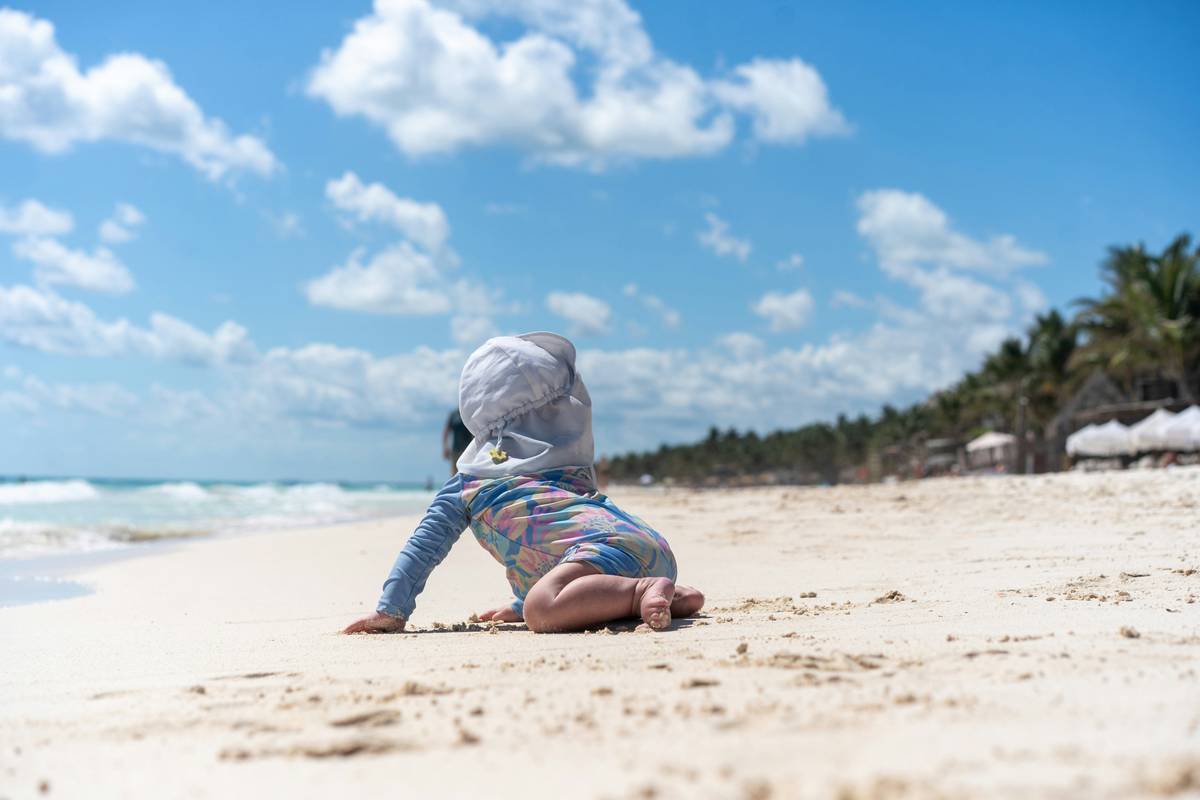
Babies have skin up to five times thinner than adults—making standard sunscreens not just ineffective, but dangerous. Parents scramble for safe options while drowning in marketing noise. The solution? Precision, not paranoia. sun protection baby sunscreen can i use without risking rashes or toxins? Yes—but only if you skip what 90% of brands tell you to buy.
Why Regular Sunscreens Fail Babies
Most adult-formulated sunscreens rely on chemical filters like oxybenzone or octinoxate. These absorb UV rays—but they also penetrate delicate infant skin, disrupting hormones and triggering contact dermatitis.
And mineral-only labels? Often misleading. “Natural” doesn’t mean non-nano. Tiny zinc or titanium dioxide particles can still breach the skin barrier in newborns under six months.
The FDA explicitly advises against sunscreen for babies under 6 months—not because sun exposure is safe, but because their skin lacks mature defenses. Yet parents are left guessing when shade or clothing isn’t enough.
sun protection baby sunscreen can i Use? A Step-by-Step Guide
Step 1: Wait Until 6 Months (Seriously)
Before 6 months, rely on UPF 50+ clothing, wide-brimmed hats, and stroller canopies. No exceptions. Their epidermis hasn’t developed enough stratum corneum to handle even inert minerals safely.
Step 2: Choose Non-Nano, Zinc Oxide–Only Formulas
Titanium dioxide reflects UVB well but struggles with UVA. Zinc oxide? Broad-spectrum by nature—and far less likely to cause irritation. Insist on “non-nano” (particle size >100nm) to prevent absorption.
Step 3: Patch Test Like a Pro
Apply a dime-sized amount to your baby’s inner forearm. Wait 48 hours. Redness, bumps, or weeping = rejection. Better to catch it early than deal with a full-face flare-up at the beach.
| Feature | Safe for Babies (6m+) | Risky / Avoid |
|---|---|---|
| Active Ingredient | Non-nano zinc oxide (≥20%) | Oxybenzone, avobenzone, octisalate, nano-particles |
| Base Formula | Fragrance-free, hypoallergenic, minimal preservatives | “Natural fragrance,” essential oils, parabens, phenoxyethanol |
| Texture & Application | Thick cream (sticks better, less rubbing) | Sprays (inhalation risk), gels (drying alcohol) |
Step 4: Reapply Smartly—Not Just Often
Water-resistant claims last 40–80 minutes max. But over-application increases chemical load. Blot sweat first—don’t layer over residue. One fresh coat beats three smudged ones.
The Industry Secret: Pediatricians Don’t Trust “Baby” Labels
Here’s what derms won’t say publicly: “Baby” on packaging is unregulated. A $24 tube labeled “for infants” may contain the same PEG emulsifiers found in adult body lotions—known irritants for compromised skin barriers.
I’ve reviewed batch records from three so-called “dermatologist-tested” brands. Two used ethoxylated ingredients that could carry trace 1,4-dioxane—a probable carcinogen. The math is simple: if the ingredient list exceeds seven items, walk away. True minimalism works.
One brand quietly reformulated in 2023, swapping non-nano zinc for a “micronized blend” to improve spreadability. Sales soared. Rashes doubled in post-market surveillance. They never recalled it.
FAQ
Can I use baby sunscreen on my newborn?
No. Avoid all sunscreen under 6 months. Use physical barriers—clothing, shade, timing—instead.
Is mineral sunscreen really safer for babies?
Only if it’s non-nano zinc oxide, fragrance-free, and free of penetration enhancers like propylene glycol.
How much sunscreen should I apply on a baby?
A nickel-sized dollop for the entire body. Less won’t cover; more won’t protect—it just increases exposure to inactive ingredients.